The Himalayan Institute of Mountaineering Part 2
20 minutes.
Part 1: A Princess Or An Ice Axe is the first piece on the blog. If you haven’t read it, now is the time. After ten days at the Himalayan Institute of Mountaineering, we set off to continue our training in the mountains.
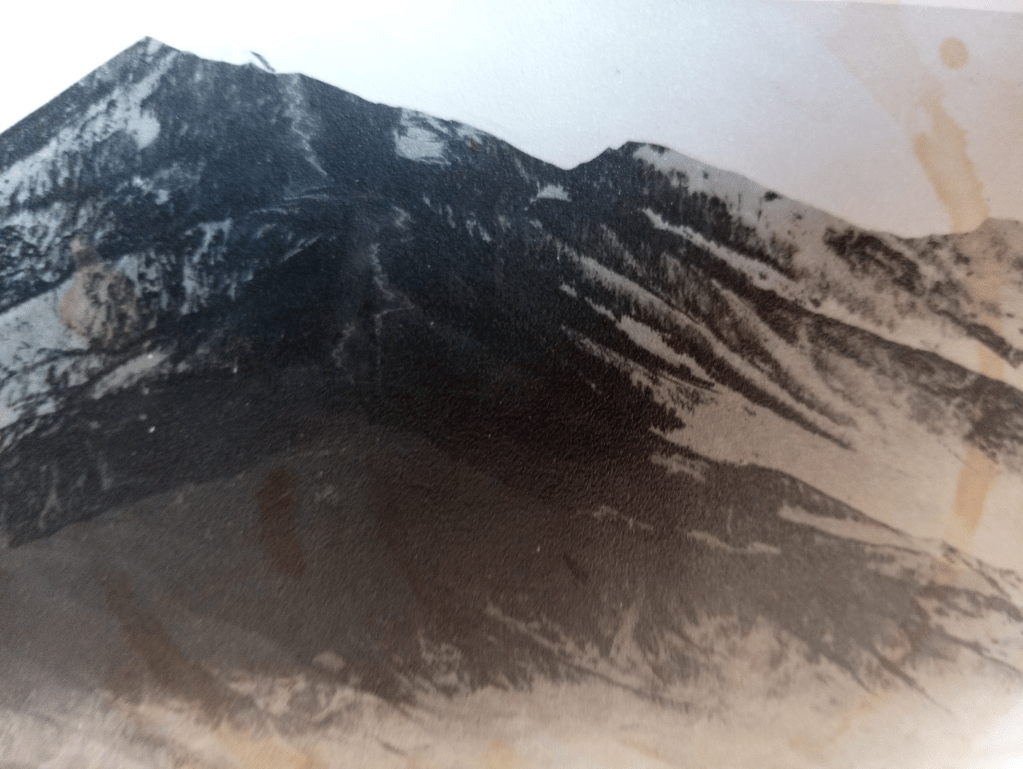
The day after we’d been issued our climbing and camping kit, we got up early to load an antiquated truck which left with all the gear. Then we waited for a rousing send off from the Director, who arrived after a two hour delay. It was a splendid speech, expressly designed to put us off climbing for life. “Sometimes people get angry and if there is an ice axe in their hand they might use it… Sometimes the instructors do it also… Most of you show no interest in climbing… The best part of climbing is being dirty… Your cooks often show no interest in you. They may be lazy and tired, and the food will probably be dreadful.”
After this rousing pep talk we walked up the Kulu valley past a police checkpoint, where we each had to show a chit from the institute as we were on the road to the Rohtang pass which was a restricted area, on the borders with Tibet. After an hour or so, we turned off onto a dirt track which climbed through the forest. We were beginning to feel the altitude, but my room mate Chopra and I were fit as a sitar. After ten kilometres, we found the lorry, and helped carry kit bags and supplies through the trees to a wooden hut where we would spend the night. We had a dull, damp and chilly afternoon waiting for dinner, and anxious to get into the snow. Outside the woods dripped with rain.
The next morning, about twenty Sherpa porters arrived to carry the food and kitchen camp gear. We students carried all our own kit for the first time, mine about forty pounds as I was carrying Hillary’s boots and a bottle of brandy, on a the four hour trek into melting snow. We post-holed (sank down past our knees) exhaustedly for almost an hour doing the last mile to camp. This was Dundi, at about 9,500, in a large snow covered meadow on the tree line, with the Beas river running through it under the snow. The Sherpas, had already set up a kitchen tent, and delivered a large pile of wood for cooking, and for a big fire outside the cook tent. They wended off down below the snow line for the night. From then on, they made a daily carry of wood to keep the fires going.
We pitched our canvas tents on snow for the first time, blew up air mattresses, rolled out sleeping bags, and sorted our kit. In the latrine, I noticed that in two places I had what looked like bed bugs burrowing into my scrotum and my leg. I told Pete, a Peace Corps volunteer who was also on the course, who let me have some powder. After applying it I discovered that there were two creatures floating around in my clothes too. Unwilling to move up to high camp with these hitch-hikers, I stripped to my underpants and plunged twenty yards through the snow, barefoot, to the river. I stood knee deep in the freezing stream, then plunged under water that came out from the snow just yards away. I was in the water for just seconds, then hobbled back across the snow to my tent and changed into clean clothes. Following my example, three or four of my class mates, perhaps thinking my plunge a part of British culture, or good mountaineering style, went into the water too. But they stood around, in the freezing waters calling for friends to take pictures, (one, while explaining to his tent mate where his camera was to be found, turned a bright purple).
Later, Chopra and I wandered over to the large fire by the kitchen, and spent the afternoon talking to Purshotum and Dan Kumar, our two trainers, and drinking cups of hot chai from the cook tent. Purshotum was a member of the North West Frontier Police, whose role was to patrol India’s mountainous western borders with China and Pakistan. He was as hard as nails, and sat in his shirt sleeves as we covered ourselves in sweaters. That evening we ate the goat that had been slaughtered in the morning. For obvious reasons, they were going to throw away the intestines, but they thought we Brits ate them as we ate ‘sausage’. So, at tea time I was offered the intestines. I ate them, rather reluctantly, with the few others around the fire. I didn’t have the heart to explain that sausages used the intestine skin but we didn’t eat the contents of the intestines. As I was eating my piece, I wondered how far from the end of the intestines it came. Most of our fellow trainees, either slept, or played cards in their tents, missing out on hot chai and great stories around the fire. However, on this occasion, they also missed joining in on the intestines.
Each morning at 6, we were woken with “Chai sahib” from outside the tent. We struggled to get the frozen zip open with freezing fingers and then lay in our sleeping bags drinking the hot sweet tea. From after breakfast until lunch, we went to the slopes above the camp and learned glissading (or boot skiing), leaning on a 4 foot ice-axe, self arrest techniques (how to stop a slide on steep snow with an ice axe), rope work, and walking in crampons. Each afternoon, Chopra and I went back to the fire, where we joined Purshotum and Dan Kumar, ate tasty extras from the cook-tent, and listened to wondrous tales of the mountains. Dan Kumar was a very tough Sherpa. He’d broken various bones and had had numerous adventures. He’d walked out from one trip with a broken leg, and on another carried a trainee down off a summit. He told us this in a quiet unassuming manner. Purshotum told us the best story about him. A recent advanced course had succeeded in putting four of their twelve members on the summit of a 19,000 ft peak, and were boasting to the basic course students camped nearby. Dan Kumar decided he’d had enough, and so he’d taken the entire basic course – all twenty trainees, up the same summit a few days later!
One afternoon, as we sat around the fire, Purshotum spotted a bear in the trees across the valley, half a mile away, and jumped up to chase it. I joined him, and we slithered down through the snow. As we struggled up the far slope Purshotum told me his plan was to beat the bear over the head and have bear meat for dinner! This seemed like a pretty dangerous exercise, but I was committed, as otherwise I’d have had to abandon him to do it alone. We hadn’t gone to get our ice-axes by our tents, and so Purshotum picked up a large bough, and I got one too. We struggled up the slope through deep snow, and saw the bear disappearing behind a large rock. We carried on up, past the rock but (happily) the bear had moved away. After a search through the trees we abandoned the hunt. We glissaded back down the slope, using our boughs for support and mine snapped in two almost immediately, as it was completely rotten. Then Purshotum’s broke too. Thank god we hadn’t hit the bear over the head with them!
After four or five days we moved up into the basin below Beaskund, the source of the Beas river, at about 11,000. Here were well above the tree line, overlooking a range of jagged peaks, which we watched avalanche thunderously each afternoon, from the cook-house fire. Each day the Sherpas still brought bundles of firewood up from below the tree line, so the cook fire and large fire outside the cook tent continued to burn merrily. One afternoon, the director arrived.He sat around the fire withus, and after supper his servant came up and said, “I have put your hot water bottle in your sleeping bag, sahib”. So much for the tough climber!
We carried on acclimatising and improving our snow skills. We were supposed to do some ice training, but because of the late spring, the ice was still covered in snow. We made a trip up to Beaskund itself, the source of the Beas river, at 12,000, but still saw no ice, so we improvised a crevasse rescue on a steep slope. We were now pretty adept in basic snow skills, tying onto a rope, rope management, ice-axe belays, walking in crampons, and camping on snow (though with all meals provided). Many of the trainees had problems keeping warm, as they had not checked their kit as instructed. Some froze in inadequate sleeping bags, some had boots that didn’t fit, or only one pair of socks. They put their wet socks to dry by the camp fire in the afternoon, but often left them unsupervised, and a few burned holes in them. I kept my feet warm in Hillary’s oversized shoes with my three pairs of socks. The shoes let in some snow, in spite of the gaiters, but each afternoon I was able to carefully dry my socks by the roaring fire.
Summit day. We are woken at 2am- the weather has cleared. Climbed into my boots and went down to the kitchen tent. I was issued 1 hard-boiled egg, 1 chocolate bar, 15 biscuits, and 6 toffees. I had taken a tiffen box full of rice, ghobi and ghosh (corned beef and pork luncheon meat mixed) last night as most people hadn’t turned up for dinner through the rain. We set off at 3.30 am but after a few hundred yards, I realised that I had forgotten my symbolic bottle of Remy Martin VSOP cognac, which I’d brought from our well stocked cellar in Hyderabad, to celebrate the summit. I hurried back to my tent and ferreted it out of my kit. By the time I set off the second time, I was quite a ways behind the group. I spent the next hour catching up and over-taking to join the front runners. We stopped at 15,500 (about the height of Mt Blanc, western Europe’s highest peak) for a proper break and a briefing, in the morning light. I pulled out the brandy and offered it around. Most refused, but I insisted it was a tradition to have a snort on the summit bid. Many then accepted the offer and had a bottle capful. This wasn’t conscious sabotage of my fellow trainees, but seeing as many of them had never had a drink before, it probably didn’t help them to have their first drink on a freezing morning at 15,500 ft. I had a couple of capsful and we roped up in pairs and I set off, this time as part of the leading group. We continued up, eventually arriving underneath a steep snow slope. The first pair set off kicking steps, but soon tired, and Chopra led us past them. The snow was soft, and very steep, and it was really heavy going step kicking at 17,000 ft.
When Chopra stopped and leant heavily on his axe, Dan Kumar, told me to take the lead. I kicked steps at almost knee height, but they came down to within a few inches of the lower foot. I carried on up, slowly approaching a ridge line fifty feet above my head. As the ridge approached head height, shoulder height… I nearly fell over backwards. I was looking over to a slope that fell steeply out of sight. Far away in the distance was Tibet, with a vast 23,000 foot peak looming above the others. To my right the slope fell away too, and there was Manali, 11,000 feet below us! I was stunned. Dan Kumar got me to move to my left along the ridge, which sloped gently upwards.
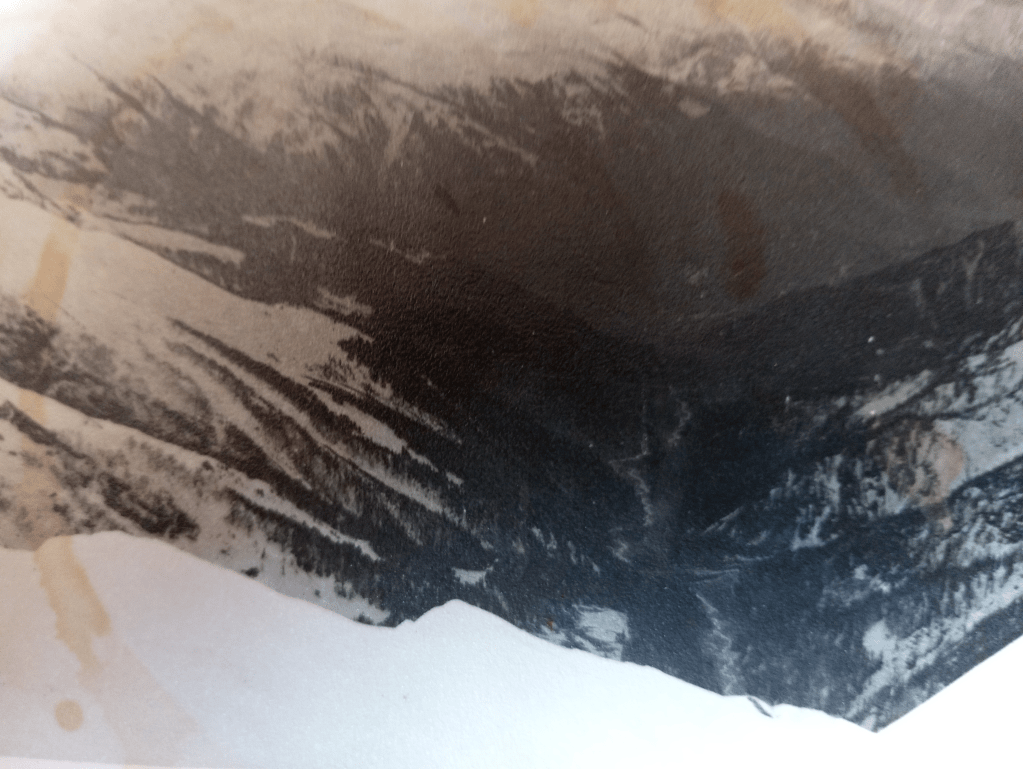
I could see the peak to my left a few hundred yards away along the ridge with the sun shining through a cloudy day (the first sun we’d seen). I could see 50 miles in to Spity and Lahoul. There were 4 or 5 ranges of very impressive mountains running roughly from left to right across my vision – everything ahead was above the snowline, some above 20,000 feet. To the right, I could see more vast mountains and below them, looking wonderfully green, was the Kulu valley from Solong to Manali and past about 10 more miles. I took 3-4 picturess and by then Dan Kumar and Chopra and the prof had overtaken me, and were traversing the ridge. The mist was fast coming up, and soon the visibility was only a couple of miles. We traversed the ridge for fifty feet including twenty feet balanced on top. After perhaps half an hour, most of us were up. Looking further along the ridge we could see that it was heavily corniced and Dan Kumar thought it was at risk of sliding and that the snow conditions (which were unusually bad for the time of the year) were too dangerous. Soon we began to get cold, so at about 11, we set off down; running, jumping, whooping and glissading the 6,000 feet back to camp by noon. We then spent a rather dull early afternoon, hungry, as we’d eaten our limited summit supplies, but later Chopra and I sat at the cook-fire, and drank tea with Purshotum and Dan Kumar, and enjoyed a few chapattis which miraculously appeared from the cook tent.
Next instalment: Can I get on the advanced course? The Indo-Pakistan war and jumping a troop trains going north.
 writesimon
Gripping! Thank you Simon – these are such great stories. Admire your chutzpah and dedication!
LikeLike
Good to read episode two of your mountaineering-training adventure. What an experience and thankfully no run-in with the bear! I think it’s likely that you got onto the advanced course…but we shall find out soon; I hope. Gary.
LikeLike