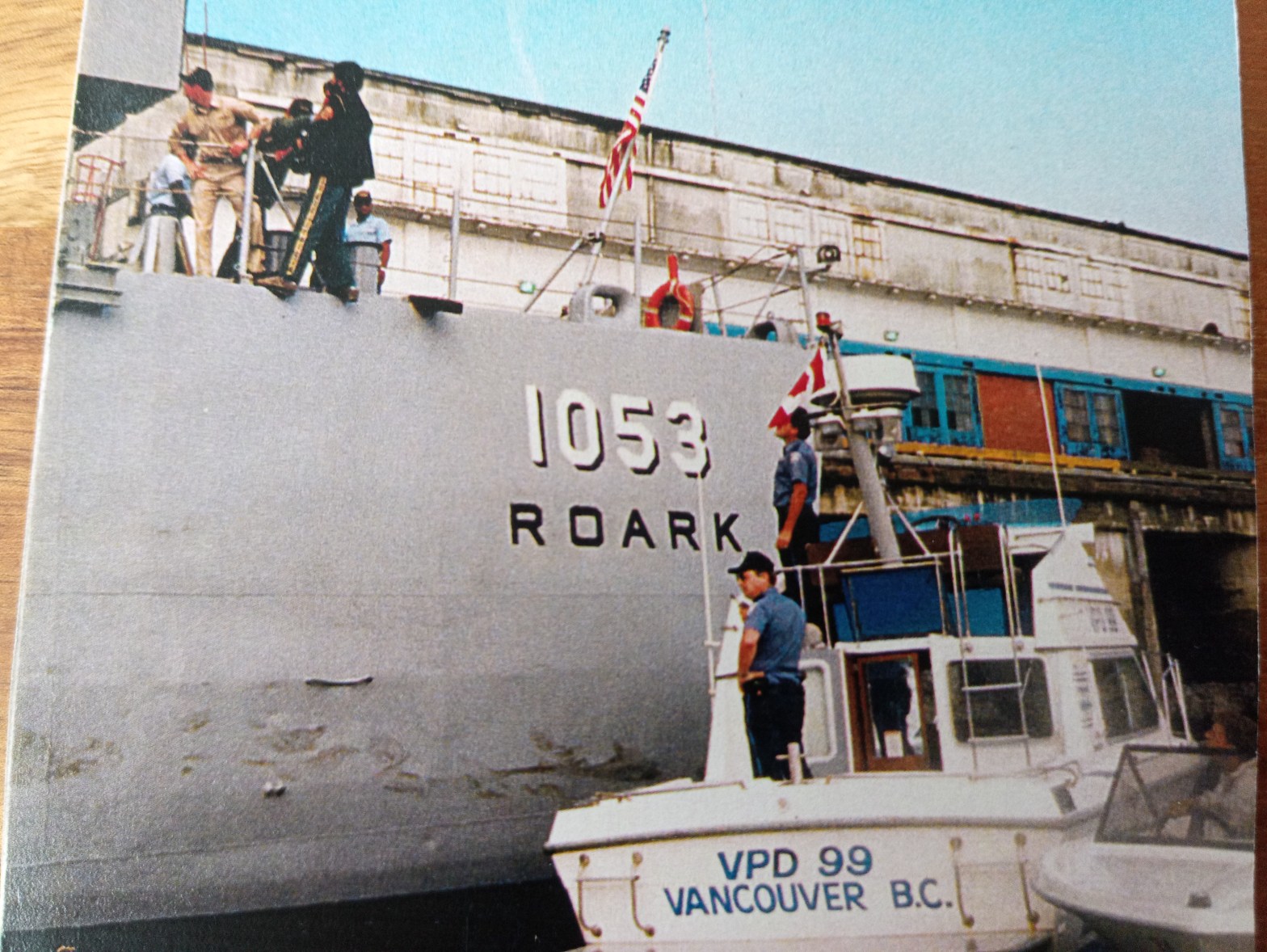
USS Roark, Vancouver
1000 words/10 minutes
The tiny Greenpeace sailing boat motored quietly towards the USS Roark, a nuclear armed warship, tied up to a dock in Vancouver, B.C., I felt sick. Nobody, as far as I was aware, had ever tried to board a US warship, and I was to be the guinea pig. I didn’t want to be shot by the US marines as I climbed up the side of the American frigate. I knew there would be a scandal if they did shoot me, but I might not be alive to enjoy the US Navy’s discomfort if the captain ordered me shot, or a trigger happy marine shot me by accident. And, I wasn’t convinced their protocol would ensure they didn’t shoot me.
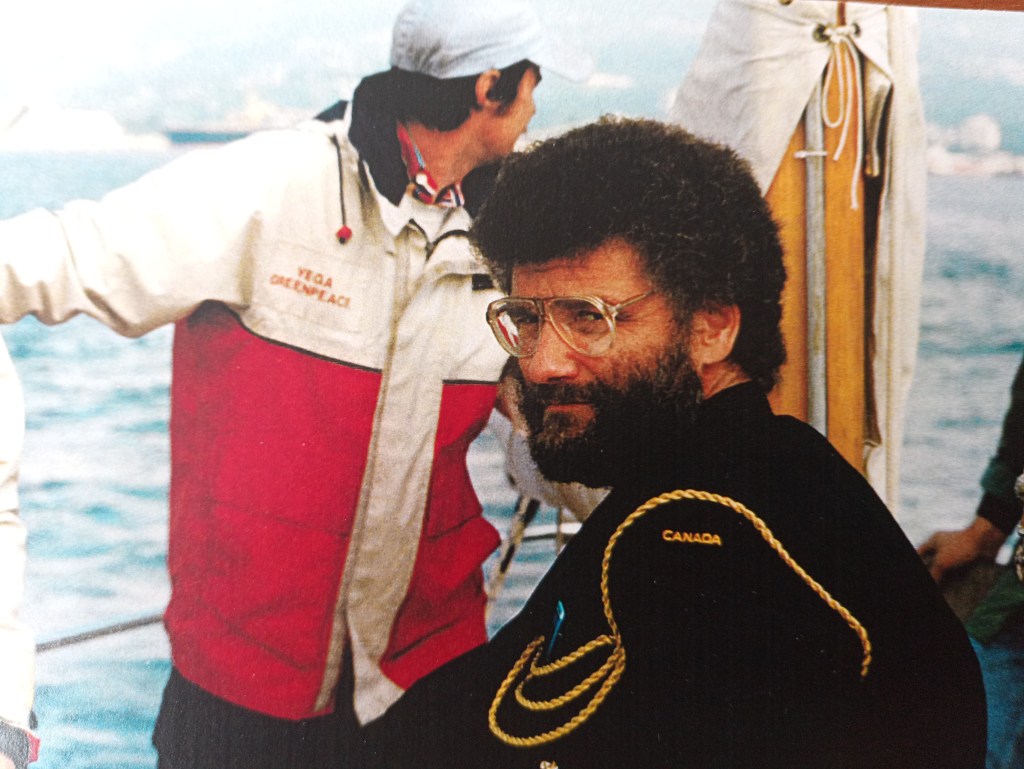
It was a mixed blessing that Steve Shallhorn, Greenpeace Canada’s Nuclear Free Seas campaigner had complete confidence in me. When he’d come up with the idea he’d chatted with me at the office. “Simon, with your gift of the gab, you are the only one that can pull it off”. It was broad day-light and our boat was followed by another boat carrying Canadian print and television media. But the US navy was bound to be touchy about anyone boarding their ship uninvited.
I was on board the Vega, the iconic Greenpeace sailing boat that had twice ventured into the waters around Mururoa atoll in 1972/3 skippered by David McTaggert, a Canadian who later founded Greenpeace International. McTaggert had been assaulted by French marines, who had boarded the Vega and beaten him badly, causing him to lose the sight of one eye. The French had later blown up the Rainbow Warrior killing Greenpeace photographer Fernando Pereira in 1985. I had no confidence the Americans would be any less protective of their nuclear fleet. The Roark was berthed in Vancouver, a self declared Nuclear Free City. But the waters around the city were a federal government jurisdiction and the city of Vancouver had no control over what ships came to visit. As the Vega approached the Roark my pulse raced and my stomach felt sour.
The Vega had a high powered crew: Twilly Cannon (who later became Greenpeace US action coordinator) was skippering, while John Sprange the Greenpeace International Action Coordinator, and Pat Herron the Greenpeace US zodiac legend, both hefty blokes, were there to hold the ladder I was to use to climb aboard. In order to avoid possible legal complications for Greenpeace (!), I wasn’t dressed as a Canada Customs officer (the official designation). Instead I was dressed as a Canadian Customs officer: wearing an official looking jacket found in a charity shop with added gold braid and brass buttons, and a pair of green cord trousers with stripes down each leg, all laboriously sewn on by me.
Before boarding, I read out a statement: “I represent Canadian Customs, and it is a Canadian custom to be nuclear free. I will be boarding your vessel to confirm whether you are carrying nuclear weapons.” The ship then went aside the USS Roark and the ladder was hooked over the ships rail. “I am coming aboard”, I called. “Negatory” responded a burly seaman and he and two other sailors quickly tipped the ladder off. John and Pat hooked it back on again and John shouted “Go, go” and I scurried up the ladder like a rat fleeing the wrong ship. At the top of the ladder the three sailors grabbed and shoved me and tried to throw off the ship. I feared that if I was tossed back onto the deck of the Vega, I would possibly crack my skull or break my back, so I shouted to the Vega to cast off. This took what seemed like an age, as I clung on in panic until I saw that they had got out from under me. One of the three sailors was painfully forcing my fingers off the cable of the ships rail. I clutched the cable frantically, while the other two sailors pushed and shoved at me from the other side of the rail.
Once I was sure that the Vega was away, I considered letting go. Being tossed into the sea by American sailors would show their disrespect for Canadian Customs! But with a strength born of desperation, and too much experience rock climbing of having to hang on when a slip could mean a serious injury, I managed to hold on. After a few minutes of tussling, the three sailors stopped trying to throw me into the sea. I stood with each arm held by a sailor, loudly demanding the right to board and make a search to discover if they were carrying nuclear weapons.
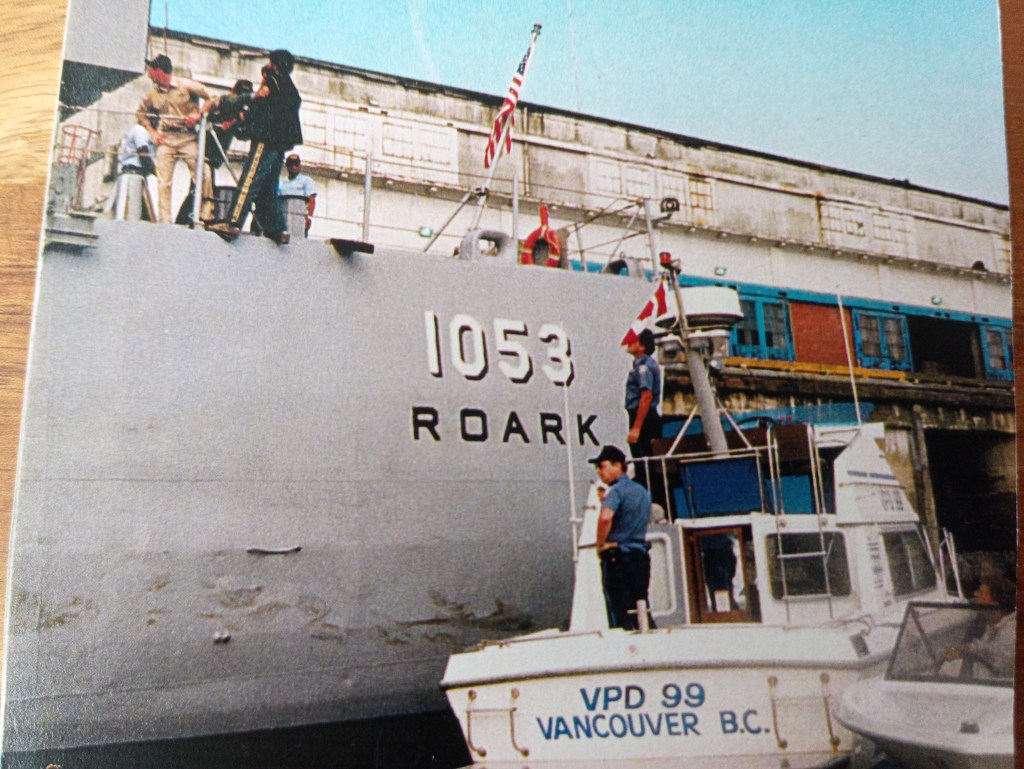
I carried on with my demands to inspect the ship for nuclear weapons. I demanded the captain call off his sailors and show respect for Canadian Customs. “You are guests in our country. We have a right to know if you are bringing nuclear weapons into the middle of our city!” After a while, the sailors relaxed, and just held me without trying to throw me into the cold water. Ten minutes later, two Vancouver Harbour police boarded the ship, from the dockside, crossed the deck and escorted me off. I was taken to the Harbour Police station on a quiet back street behind the docks, and after being booked I was let go. After all the tension and high level of adrenalin, I got out of the police station feeling a little flat. It was still early in the day, Steve Shallhorn and the press people were dealing with media, and the Vega crew were taking the boat back to its dock. I am not even sure that I got a free beer out of my frightening mornings work. But at least I hadn’t been shot.
video


Very succinct and clear reportage of your role in this event. Your moral courage and your wit – especially the detail of the uniform design and it’s making – are so well balanced.
The image and then the video add an additional authenticity to your writing; but to be honest, I did wish for more than the 1000 words of memoir narrative from the man of that hour.
Keep on keeping on.
Gary.
LikeLiked by 1 person
nerves of steel Simon! a great read too.
LikeLiked by 1 person