A tale of the joys and tribulations of homesteading in the Canadian wilderness
20 minutes
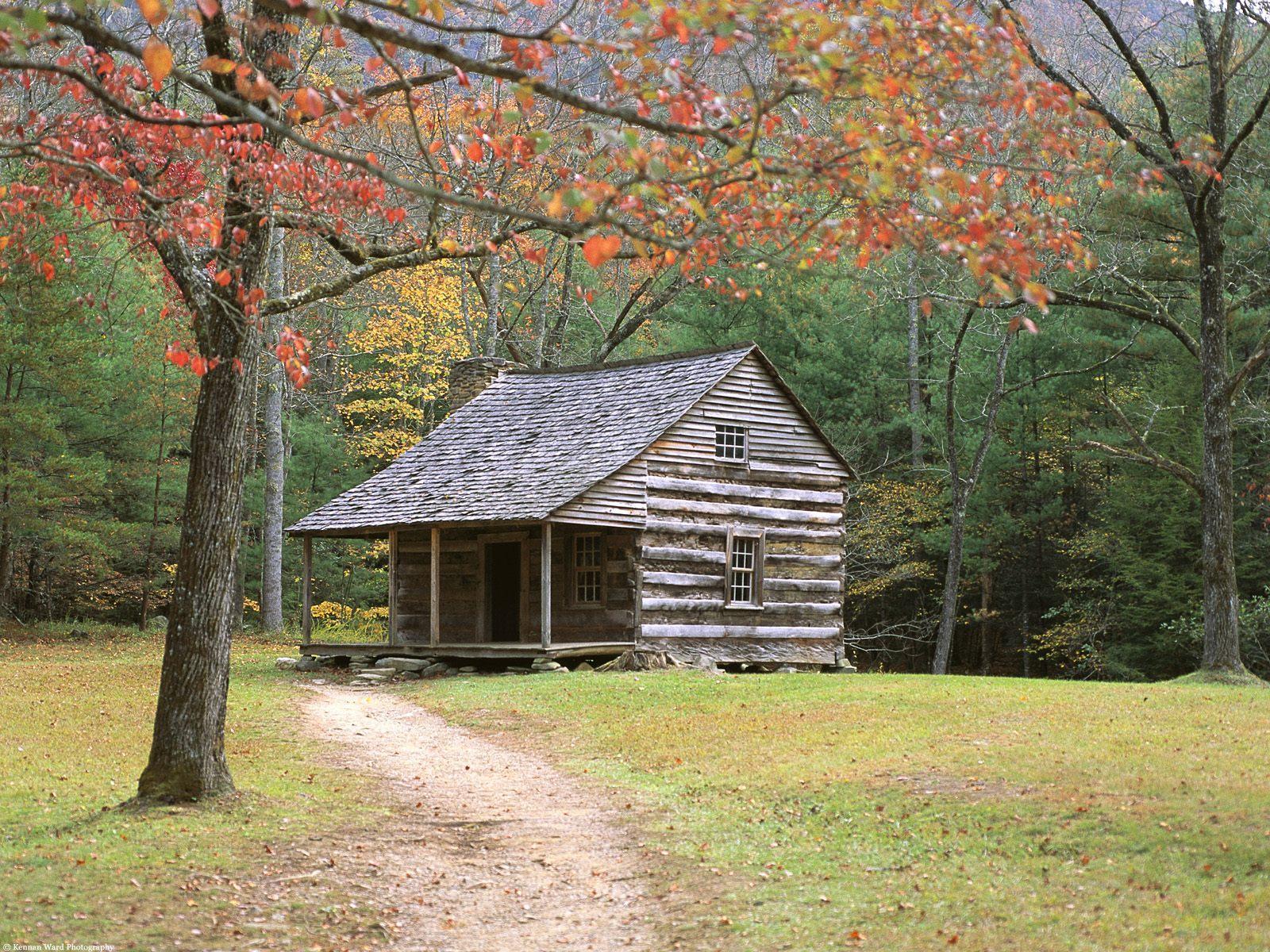
Michael was first up. He slid out of the double bed, onto the sleeping platform above the kitchen, and went quietly down the ladder. Slipping on a warm coat from behind the cabin door, he unhooked the latch and went outside. Michael warmed up quickly splitting a couple of armfuls of logs, and making more kindling. He looked across the clearing, the trees starting to turn colour, to where the river ran fast, cold, and deep. Beyond the river, the forest swept upwards towards the distant blue hills, now already dusted in snow. In another month, they’d be snowed in. As he carried the first armful of wood and kindling into the cabin, letting in a gust of cold wind, Diane stirred in the bed. Michael stacked kindling and split logs onto the remaining embers in the airtight stove, and opened the vents to get the fire burning hot. He made coffee and took the pot outside into the morning. He’d grown to enjoy this first half hour, starting the day with brisk chopping then coffee on the bench outside the cabin. It was his time, a time alone to appreciate the quiet morning. With the thick coat over his pyjamas he leaned against the cabin, revelling in the bitter, sweet taste of strong Java. It would soon be too cold to sit out in the mornings, with winter temperatures of 30 below. The cabin was almost finished: the roof on, the doors and windows in. Michael felt real satisfaction. He and Diane had arrived just four months earlier to an empty clearing, with just the ramshackle remains of an old trapper’s cabin from long ago. After they had dragged all their supplies by sled over the frozen, snow laden ground from the lake where the float plane had left them, they’d set up the big tent, which had room for a double bed and a small kitchen area. The rest of the tent had been filled with the two tons of supplies they’d brought for a year in the wilderness. It had taken almost thirty journeys from the lake, three miles along a trail they’d brushed out and worn down through a stunted, waterlogged wood, across a mile of marshes, all still frozen in the pre-thaw spring. They’d cut logs, dragged them to the clearing and fashioned a cabin with a dirt floor, airtight stove, sleeping loft, and a kitchen with shelves and counters of rough wood. Then they’d hauled in their food, pots, dishes, lamps, books and clothing from the big tent.
The big tent was now a store room and workshop, where they were getting the last pieces of furniture finished and building racks for skis, snow shoes, heavy boots, and their winter camping kit.
Everything had gone well- better than Michael had expected. He and Diane had complimented each other. He liked big jobs, cutting down trees for the cabin, (though he’d often had to ask her to help drag them back to the worksite), stacking up the cabin walls, chopping firewood, making rough furniture for the cabin. Diane had managed the supplies and organised the food- though Michael still did most of the cooking. She seemed to really love the place they’d chosen for their year in a cabin. The last few days, though, she’d been moody and uncommunicative. Michael knew he should have talked about it earlier, but he also knew that Diane had places she did not like to share. He went in to take a coffee up to Diane and start breakfast.
-o-
Michael sat stiffly on the just completed log bench, staring at his boots as if appalled at their covering of mud and sawdust. Michael looked up at Diane, realising for the first time the terrible finality of what she wanted. He muttered ‘I see’ so quietly she barely heard him. Diane got up from across the log table and slowly, exhaustedly, crossed the cabin floor and went out into the early September sun. Michael followed her out with his eyes, watching the roll of her hips covered in a pair of old jeans. When the door closed, the only movement in the cabin was the slow roll of tears from eye to cheek. At first Michael sat in deadened pain. His mind wandered back for signs that their idyll would turn to this. When the idea struck him, it seemed contrived and yet there was poetry and hope both in the plan.
Diane came back at twilight to find Michael, unusually, lighting all three lamps.
‘I’ll make supper,’ he said and went into the cabin’s kitchen area.
‘We have to talk,’ said Diane.
‘Do you mind waiting until we’ve eaten?’ asked Michael over his shoulder. He waited for Diane’s unenthusiastic ‘alright’ and continued rooting around the shelves and food boxes.
As he cooked, Diane sat at the table and tried to write a letter.
After supper Michael said, ‘I know you want to leave, and there is no point in my trying to dissuade you.’
He looked at Diane across the candle lit table. ‘No,’ she said.
‘I just want to make a suggestion before you go,’ he continued. We’ve brought enough food for another seven or eight months and I know we can’t take it back with us, but there is one thing I think we should do before you leave.’
Diane looked at him with a puzzled expression.
‘Maybe you think it’s foolish, but we went to so much trouble to plan Christmas…’
‘No, Michael, the river will freeze soon, I have to leave now.’
‘I didn’t mean wait till Christmas.’
‘What then?’
‘I just think we should have our celebration now, an early Christmas.’
By the end of the evening, Diane had reluctantly agreed to postpone her departure until the 27th. The river would still be flowing, and they could make the journey down to Blackwell by canoe in two days if things went well. How, or if, Michael would return to the cabin was not discussed. He’d got her agreement to stay the next six days by promising to accompany her out. It was the evening of September the 20th, so they had four days to prepare for Christmas on the 25th.
The next morning, while Diane was still in bed, Michael took his coffee into the storage tent and began to move boxes. Diane found him 45 minutes later towards the back of the tent, pulling out a crate from the stacks of food crates, winter clothing boxes, survival gear, and other parts of their vast resources. ‘I’ve found the first Christmas box,’ he said, ‘the other one shouldn’t be far away.’ Michael spent several hours in the storage tent, and unusually, didn’t make any lunch. Diane had no enthusiasm for the Christmas preparations. Instead, she spent the morning sorting out what she would take, and writing up a list of what she needed to find buried in the boxes in the storage tent. Later, feeling hungry, she snacked alone on cheese and crackers. In the afternoon, Michael came into the cabin. ‘I am going to go and look for a Christmas tree,’ he said and Diane watched as he crossed the clearing into the woods. A little later, she heard the ring of the axe.
The next day, the 22nd, Michael was again rummaging around in the storage tent. By two, feeling hungry, Diane began to make a meal for them both out of tinned soup, tinned cheese, and some bannock that she made. She had never made bannock before, but she had watched Michael make it many times. She realised that she had not really pulled her weight during the last four months, though Michael seemed happy to do a lot more than her. She felt a real sense of satisfaction in the bannock, which turned out crusty and delicious. She called to Michael when the meal was ready.
On the morning on the 23rd, Michael asked her how they should organise Christmas. How were they going to divide the food between Christmas Eve and Christmas dinner? He pulled out the Christmas boxes list and showed it to Diane. There was a tinned duck, a tinned salmon, a large tinned ham as well as oysters, cheeses, wines, liqueurs, nuts, dried fruit, Christmas cake, Christmas pudding, mince pies, Christmas crackers, decorations for the tree… the list went on. At first, Diane found the thought of so much stuff intimidating. She was not in a Christmassy mood, the weather was wrong, her mood was wrong. But as she read down the list…Christmas stockings, mistletoe, holly, Christmas candles…. she remembered her family Christmases of long ago, her mother enthusiastic to have all the kids together and focussed on a common celebration, her two sisters both excited by the lights and the prospect of presents and a slap up meal. There was no man in her memories, as her father had left them when she was very young, and her mother had remained alone, bringing up her three daughters. Diane looked over at Michael fiddling with a set of battery operated Christmas lights. She saw the concentration, the relaxed posture. Michael obviously loved Christmas, and could forget his sadness and focus on the little tasks necessary to setting up the cabin. Diane realised that he was a good man. She knew he was good looking, and hard working, and focussed and kind to her, but this was the first time she had realised that he was a good man. What would happen when they got out of here? Their relationship would be over, and she would be back looking for a job and a place to stay. She could reconnect with her friends, but apart from Angela, she’s missed none of them; and Angela was getting married and would be busy with her new husband. She felt a wave of despair sweeping over her. There was no going back to what it had been like. She was sure that everybody would have carried on with their lives and she would have to explain why her idyll of a year in the wilderness, isolated and self sufficient had ended so soon. ‘Why had it ended? Was it Michael’s fault, or hers?’
She shook herself and realised that she had become afraid. Afraid of a whole eight months stuck in this small cabin. Eight months with Michael. She had known him already for six months, and largely enjoyed his easy going, but focussed presence. But two of those months had been spent in the social whirr of Vancouver, still working for the first month and a half, then a fortnight of final preparations, and a mad rush of saying goodbyes. It was Michael’s idea to spend a year in the wilderness. It was Michael’s money that had paid for the supplies, the equipment, and the float plane in. It was Michael who had chosen the spot, bought the maps, made the equipment and supply lists. Michael had been planning this trip for at least two years, and dreaming about it for far longer. Diane had been drawn in by his enthusiasm, and had believed that she wanted to do it too. Michael had been looking for a partner to join him when they met, and when he’d asked her to join him, she’d jumped at the idea.
Why had she? Was it a real interest in spending a year in the wilderness? She’d liked Michael, but she wasn’t in love with him. She could remember reading about a couple spending a year in the Nahanni wilderness when she was at school. She’d read the book, but the idea of doing it herself had never occurred to her. Diane was 27. She had been three years in Vancouver, and stayed in three different apartments. Groups of girls formed and broke up as people moved in with their boyfriends, fought with a flat mate, or returned to Ontario or Quebec, where most of her friends and acquaintances came from. She’d been friends with Angela since soon after she had arrived in Vancouver, and they’d shared two places together with other girls. But that had changed when Angela met James. Diane wondered what she would do when she got back to Vancouver. Would she even want to spend another wet winter there? She loved skiing, but the cost of an annual pass was beyond her, and the cost of a day pass and all the expenses travelling up to Whistler meant she only skied five or six times a year, and several of those days were on the mountains just out of town. But she couldn’t stay! Six months stuck in a cabin, snowed in, with six or seven hours of daylight, chopping wood to feed the fire, getting water from a hole in the river, no light but lamplight and candlelight. No friends, just the two of them. No, she’d go, but she should make the last few days as enjoyable as she could. Diane resolved to help with the preparations.
On the morning of the 23rd, Diane got up early too. Shall I put up the decorations?’ she asked. ‘In my family, we put the Christmas tree and decorations up on Christmas eve,’ said Michael. ‘When do you do it at home?’
Diane had flown home for Christmas two years ago. Her two sisters were there, and they’d put the decorations up with her sister Millie’s two children the next afternoon, about three days before Christmas. The two Christmases she’d spent in Vancouver, she’d put decorations up with her flatmates for a Christmas party a week or ten days before Christmas, so that their friends who were going away for Christmas could come. ‘It depends,’ she said. ‘I like your family’s way of doing it on Christmas Eve, but as I’m leaving on the 27th, we wouldn’t see them for long. Let’s put them up today.’
‘OK,’ said Michael. ‘Let’s do it after lunch. I’ll get the decorations sorted out.’
‘I’ll come and help,’ said Diane.
After sorting out the decorations, and untangling the Christmas lights (there were three sets! One for the tree, one to hang above the kitchen area and an external set to hang on the cabin front).
‘No wonder we had two tons of supplies,’ thought Diane, but she was strangely pleased that Michael had put so much effort into Christmas preparations. Diane had packed a small bag that had gone into one of the Christmas boxes- there seemed to be more than the three boxes she had expected. Diane had brought a present for Michael, a set of red candles for the Christmas table, a nut cracker and some nuts in shells.
Setting up all of their lamps, Michaels usual thrift had gone by the board, and with Christmas carols playing on the cassette player, they had set up the tree in its incongruous metal stand, placed numerous decorations, tinsel and taffeta, and then a large Angel on the top. ‘I have crepe paper,’ said Michael. ‘We used to cut it and twist it and string it across the room. What do you think?’
Diane remembered the arguments at home about which colours went best together. Her mother had said, ‘why don’t each of you make them from your favourite colours, then everyone will be satisfied. Her sister Claudia had put red and green together, Millie had preferred pink and yellow. Diane liked purple and yellow best.
Michael said they had done the same at his house, but as he only had one brother, they’d had two choices each. ‘What were your favourite,’ asked Diane. ‘I liked purple and yellow too’ said Michael, ‘my other choice was orange and green.’ ‘Ugh!’ said Diane. ‘I know,’ said Michael,’ let’s agree not to use that combination, ok?’ Diane had laughed, suddenly enjoying herself, and again realising what a nice guy Michael was.
After dinner, they brought out the mince pies and egg-nog. ‘We used to save that for Christmas Eve,’ said Diane. ‘We can if you want to,’ said Michael, ‘but I was thinking mulled wine, and a warming brandy.’
Diane looked at him with surprise, ‘I didn’t know we had any’ she said. ‘Well, I just slipped in a sachet of wine spices and a couple of bottles of Gluwein,’ he said. ‘Anything else you’ve kept to yourself’ she asked
‘Oh, I don’t know,’ he said mysteriously, ‘I thought it would be nice to have a few Christmas surprises.’ That night, when she got into bed , Diane felt warm and pleasantly woozy from the egg-nog and a generous glass of excellent Cognac. She realised that for the last week she had been turning her back on Michael when they went to bed. He’d said nothing. Tonight she felt warmer towards Michael, and a little horny too. She turned and lay facing him when he got into bed a few minutes after her. He did nothing though, just put his arm tentatively around her waist, and went to sleep. Diane felt slightly cheated. But she realised, that Michael couldn’t read her thoughts and would need a clearer message before he risked touching her more intimately.
Diane woke up on the 24th September, their Christmas Eve, and heard Michael humming to himself in the kitchen below her. When he heard her stir, he called up, ‘Do you want pancakes? We have real maple syrup.’
She put on her dressing gown, taken out of the winter box early, and slipped on her winter slippers. Michael was poised in front of a couple of packets of flour, dried egg mix and a real lemon. ‘Where did you get that!’ asked Diane. ‘I had it wax wrapped to keep. I thought it would be nice on pancakes.’ The pancakes were delicious, and a very pleasant change from oatmeal or Muesli, their usual breakfast. Diane had noticed that Michael had simple tastes. She thought that many of the luxuries were brought just for her. But, on the other hand, when he did have something special, he seemed to really enjoy it. The pancakes were delicious. Light and fluffy, with tinned butter and oodles of maple syrup and some tinned peaches. ‘Tinned strawberries don’t really work for me,’ said Michael, ‘I hope this is ok.’
Diane had gotten used to their simple meals, though she knew that Michael expected to be able to keep providing the occasional fish from the river (he had a plan to drill a hole through the ice and continue fishing when winter set in) and even a plan to shoot a deer, which were supposed to come to the meadow in late autumn. After breakfast, Michael asked for an hour alone in the tent, ‘I have a few things to take care of,’ he said as he left the cabin. Diane realised that she too would need an hour or so to wrap the presents she had brought- two for Michael and two for the cabin. As she sat nursing her coffee after Michael had left she remembered the thrill of anticipation before she came, the day dreams about an idyllic winter, snuggled up in her own cabin, making snow-shoe, or ski-trips across a pristine landscape, drawing again, making a pair of moccasins for each of them…. If she had thought about Christmas in the cabin, it had been of a simple affair; she’d thought more of missing going back to see her mother- this would be the second year in a row.
Continues, after Christmas
 writesimon