Tiger, Tiger, Burning Bright
15 minutes
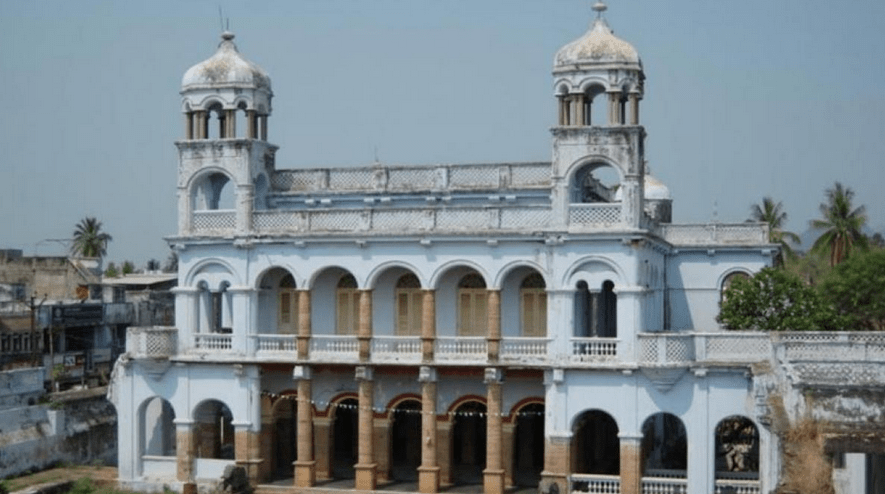
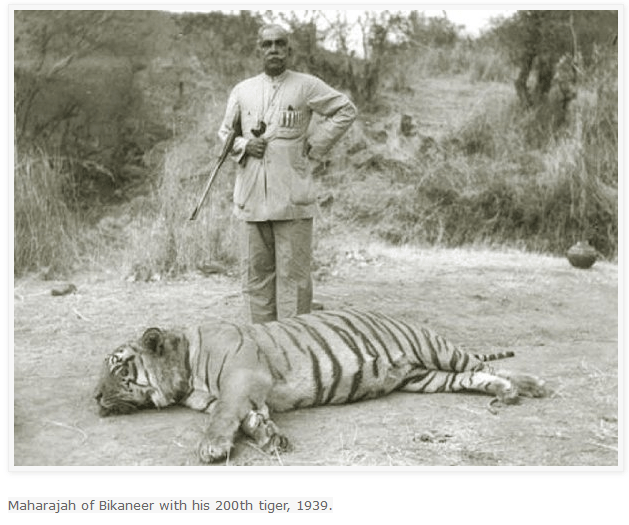
At the end of 1963, I had got as far as Calcutta, hitch-hiking from London. Exploring the city, I was walking down narrow winding streets when I saw an imposing Victorian building tucked in behind a wrought iron fence. The gate was open, and I went into the short driveway. Shrubbery filled the narrow space between street and tall gothic windows. The front door was wide open, so I poked my head in to have a look. A large hall with a high ceiling was filled with trophies of numerous animals: rhino, buffalo, antelope of all kinds, a lion or two. I was fascinated and went in to see better. Walking towards the great wooden staircase, I saw to my left a long, high-ceilinged side room, where numerous tiger heads snarled from the panelled walls. I explored further. Each tiger was labelled: My First Tiger, My Second Tiger, My Third Tiger… My Tenth Tiger, My Twentieth Tiger, My Thirtieth Tiger…. God, this man had killed a lot. A large photograph showed the maharaja on Shikar with the Governor General of India. A team of elephants stood in a forest clearing, each with several people on top. I continued along the line of tiger heads. Other photographs showed rows of elephants, hunting camps, a line of fine cars bristling with nabobs and sahibs on shikar. Soon, I found: My Hundredth Tiger, My Two Hundredth Tiger, My Three Hundredth Tiger. Damn and blast, he was the perpetrator of mass murder. The last one was My Three Hundred and Thirty Seventh Tiger. A holocaust of tigers.
As I gazed in wonder, and shock, at the extent of the killing, a servant arrived, dressed in a white suit with a small red turban, and asked me politely to leave. I wandered out from this vast mausoleum of wealth and carnage into the bustling streets of Calcutta. Streets filled with people many barely able to eat.
An unwanted block.
An interesting, but long, tale of an American general tiger hunting in India in 1924 with the the maharaja of Surguja, the top tiger hunter in India at the time with 250 kills. Perhaps it was his palace I’d stumbled upon.
https://www.nationalgeographic.com/news/2014/8/140803-tiger-hunt-1924-india-maharaja-safari/
Last ride to Bobbili
After Calcutta, I met up again with Geoff, at the Gurdwara in Bhubaneswar. We’d run into each other several times in Sikh Gurdwaras where travellers are given a mat and provided food twice a day. But after a few more days travelling together we decided to go our separate ways. So, leaving Geoff waiting by the roadside, I’d set off walking down the highway alone. Half an hour later, a 5 door Toyota 4×4 pulled to a stop. The front passenger got out, put his driver into the luggage area in the back and took over driving. I sat next to him in the front passengers seat. As we drove off he said, “Your friend is a funny man, he told me not to stop for you!”
I looked over my shoulder, and saw Geoff in the back seat, squeezed in uncomfortably next to a mountain of luggage. The new driver, told us he was the MP for Bobbili, returning to his constituency. He was an animated and interesting conversationalist and after an enjoyable hour or so, he asked if we minded him popping in to see his sugar cane crop. “Last year I won the All India sugar cane competition” he claimed. “My cane was 22 feet high!” This year he hoped to beat last years crop and win again. I had seen quite a lot of sugar cane growing, and it was usually six or at the most eight feet tall.
“That must be the world record,” I said.
“No, the Cuban’s have the world record,” he said, “24 feet.”
I took this with a pinch of salt. Half an hour later, we drove through iron gates and past a barn full of modern farm equipment into a large field, where a dozen field workers were beginning to harvest sugar cane which towered far above our heads.
He spoke for ten minutes to his farm manager, who had come up to the vehicle. As we left, he told us that he was very happy, this year his sugar cane was 23 feet tall, and one field was still growing.
We returned to the main road and he asked us if we would like to visit him in Bobbili. Finding that it was 50 miles off the main road, I said it might be difficult getting back hitch-hiking.
“Don’t worry, I will give you money for your bus fare back to the main road.”
As we drove he asked us what we would like for dinner. I said I’d be happy with anything. He listed off an amazing feast of a dozen dishes! When we arrived in Bobbili, there was a market on the main street. He drove rudely through the crowd, actually pushing people out of the way with his jeep. He said. “They don’t understand, they are stupid.” I could see that the people were aware of our vehicle, but weren’t moving out of the way due to a sullen dislike of the driver, or at least of his rude behaviour.
It was now dark, and we pulled up to a set of great wrought iron gates, which were opened by two uniformed, turbaned servants, and drove up to a vast building. “This is almost palatial,” I said.
Standing on the steps, was a tall man in silk robes and a large turban, with a vast jewel set in the front (OK, the jewel is just possibly a false memory), accompanied by a woman in an exquisite sari and surrounded by several younger women in silk saris, and retainers holding parasols. Our host got out and a servant let the driver out of the back. He took over the wheel, turned the vehicle around and left the gates. “Who is he?” I asked the driver. “He is the Camaraja (the eldest son of a raja) of Bobbili.” We drove for five minutes to a large dark building where he dropped us off. Here we waited for ten minutes until several servants came, opening the large doors and showing us into a vast dusty entrance hall. We were taken upstairs to a long room, with a dozen single beds in a line, and shown the next room with a dozen commodes lined along one wall and a dozen basins along the other. Lamps were lit and and a large table brought into the room. We sat amazed, sitting in our own guest palace. After an hour six servants carried in an astonishing feast. A whole roast chicken, chicken curry, lamb cutlets, lamb curry, fish curry, omlette, bhindi bhaji, aloo sag, dal, biriani, chapatis and fresh mangoes. The twelve dishes listed by the Camaraja. It was one of the best meals I’d ever eaten.
We slept well, and in the morning, getting up a little late, we were served a breakfast of Roast chicken, chicken curry, lamb cutlets, lamb curry, omlette, bhindi bhaji, aloo sag, dal, biriani, chapatis and fresh mangoes. This was exactly the same meal as the night before minus one dish. After a pleasant meander around Bobbili, we returned to find lunch had been brought. Roast chicken, chicken curry, lamb curry, omlette, bhindi bhaji, aloo sag, dal, biriani, chapatis and fresh mangoes. Geoff and I discussed this odd situation. We decided that the servants had only got instructions once as to what to serve, and were reducing the list by one dish each meal. This suggested we were good for a few days yet. So, we enjoyed the next couple of days, relaxing, washing our clothes, writing postcards and exploring the town. In our wanderings, we met a retired government official who told us that we were on the road to the vast Bastar forest, with its tribal peoples, the Muria. The Muria were famous for the Gotel, a place where all the single people lived until marriage, and where they sang and danced. We wanted to go visit, but there were tales that the Bastar forest was also home to numerous man-eating tigers, and especially of one that had already eaten 250 people!
On the third day after a lunch now reduced to chicken curry, omlette, dal and chapati, we were walking a little ways out of town and saw another palace a ways from the road. Walking closer, we were called over and there sitting on the verandah was our host the Camaraja. He was entertaining a fellow Camaraja from a neighbouring princely state as guest in his new guest palace. He enquired how we were doing, and we thanked him profusely for his hospitality, and mentioned our readiness to leave on the bus. He said he’d send his agent over that night after dinner. Geoff and I had a discussion on what dish would be removed at the next meal: we thought the omlette.
As we ate our dinner of chicken curry, dal and chapati, the Camaraja’s agent arrived and gave us each an envelope with 20 rupees, courtesy of the Camaraja. And so, next day after a breakfast of chicken curry and chapati we set off, not back to the main road, but onwards to brave the man-eater and visit the Muria of the Basta forest.
[Apologies for the formatting problems- hard to find time to fix it on Christmas Day]
Next: Hiding from the man-eater of Basta!
 writesimon