15 minutes
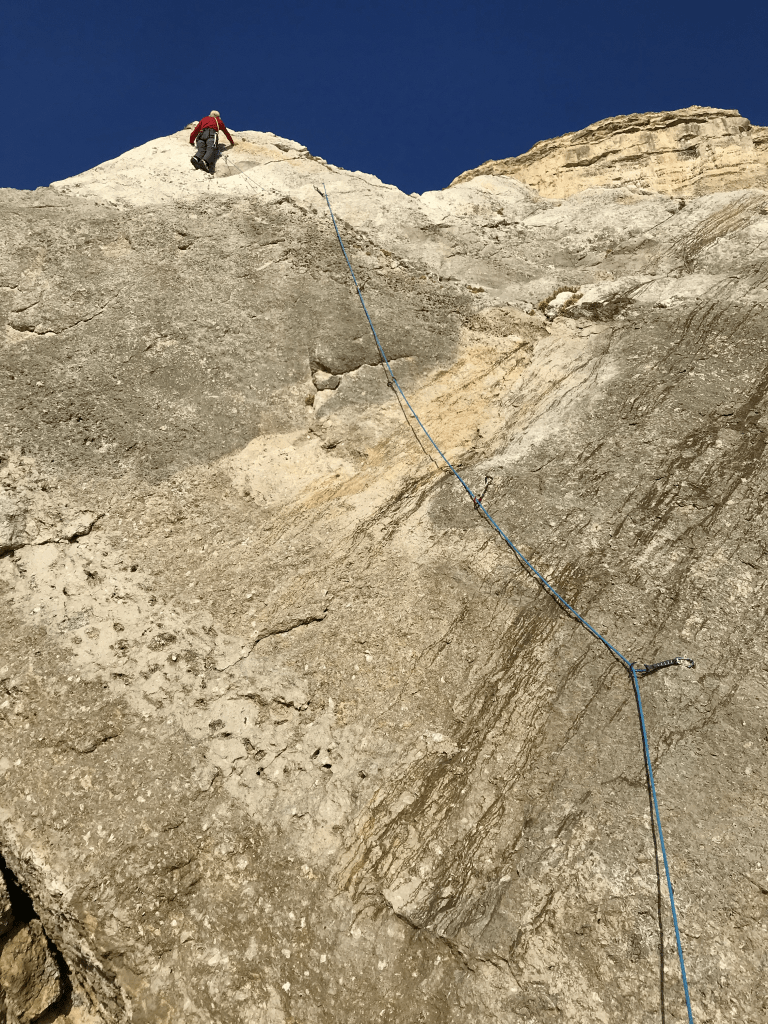
I once said to a long standing climbing partner, ‘We’ve spent some of the best days of our lives together’, he looked at me with surprise, paused for a few moments and then replied, ‘You’re right we have!’ A climbing partner shares some of our greatest moments: the excitement, the fun and the sheer fear of a day on the rocks or a week-long climbing expedition. Together, you decide what’s possible, and set off into the vertical unknown with complete dependency on each other. I have had some brilliant climbing partners who I’ve climbed with for many years. I have also climbed with complete strangers and novices. But bosom buddy or new found partner, you have each others lives in your hands for the duration of the climb.
One almost infallible rule is that you don’t climb twice with an unsafe or irritating partner. However this is somewhat contradicted by the second rule: if there is nobody else to climb with you climb with almost anybody. Even when on a climbing trip with a regular partner, you sometimes need to climb with a stranger, if for example you have agreed to take some beginners out for the day. You also have to find a new partner if you want to climb on a rest day, or if a hung-over partner needs sleep. One reason to enjoy the company of a novice (if they show common sense and basic skill), or some-one who climbs less well than you, is that you get to do all the leading, which is the ultimate thrill and satisfaction. Also, you are entirely in control of the adventure and can enjoy full responsibility; not only for yourself, but also for your partner. Each climber is responsible not only for their own safety (and enjoyment) but for their partner’s as well. In particular, the better climber is responsible for the safety of the their less experienced partner.
I usually climb with partners at or near my level of experience. This means having to accept that I will follow half the pitches. If I lead the most difficult (crux) pitch on a multi-pitch climb I feel I’ve really done it. If I follow a route, a rope stretching above me for safety, I don’t feel as great a sense of satisfaction, or even that I’ve really done the route. On the other hand, if I don’t get the crux pitch on a long multi-pitch climb, on a fine mountain, in perfect (or dubious) weather, with stunning scenery on perfect rock, I am man enough to handle it.
I also enjoy a day’s top roping, if for example I’m in a new area and learning the rock, or trying stuff that’s way too hard for me to lead. It’s also sensible to top-rope when you are coming back to climbing after a break, or climbing with a novice who isn’t safe to leave alone and out of sight at the bottom of a climb. Or for that matter, just for a relaxing day on the rock. However, a really good day’s climbing involves a combination of a great partner, fabulous rock, a new challenge, hard climbing, a particularly interesting route or routes, a high level of adventurousness, and surmounting a real challenge. The quality of the experience depends on a combination of these factors. The more there are the better the climb. Getting to lead the crux is the icing on the cake. Though a bland partner would not take the edge off a brilliant and hard new route, an irritating partner might.
Climbing in the mountains in uncertain weather is both common and a great cause of doubt about the outcome, and about the safety and advisability of the venture. Learning to effectively deal with variable weather conditions is a key part of mountaineering and a large part of the thrill. Then there is also the adrenaline factor. I did not do a massive amount of mountaineering, because in dodgy weather on dubious rock far from the road and with a question of whether the route can be done by dark, and doubts about the descent, the adrenaline demands are massive, and almost continuous. I remember once climbing in the Cascades in Washington State with Bill. We were doing the second ascent of a route that Bill had done the first ascent on. After two days hiking in and then ten hours of approach and serious, steep climbing without a break, Bill arrived at the belay, hanging five hundred feet up a vertical face, and speedily took the remaining gear off my harness, then took off in barely two minutes. ‘Bill, we haven’t stopped all day’, I moaned as he left. ‘Welcome to alpine climbing’, said Bill succinctly. When I have successfully completed one hard, isolated, mountain rock route, my adrenaline reserves are pretty much depleted. Following that 14 hour push, then cooking in the dark until 10pm, Bill wanted to do another climb the following day. I needed at least a full day off, and in fact was more than satisfied and happy to return to a restaurant meal and a few beers the next night. My adrenaline had more or less run out.
With roadside or easily accessible rock climbing, the calls on adrenaline are limited to the harder pitches. Each burst of fear and excitement is followed by the relaxation of sitting overlooking the view and bringing up your partner. In fact, probably the greatest pleasure in climbing is sitting on a ledge, feet hanging over the edge, enjoying the relief of having survived. This is made especially poignant if your partner struggles to follow you on the pitch, and even more so if they fall onto the rope. In fact a little understood rule for a good partner is the importance of flailing, and better falling, on a pitch that has challenged the leader. Climbing a hard pitch is in some ways harder for the second climber. Knowing you have a rope above you makes it much harder to apply the complete focus necessary for success when you are at your limit. Worse, attempting a really difficult pitch as the second usually follows a long period of stress and discomfort, encouraging the leader and preparing to hold a fall. It also includes a crick in the neck. While you battle ineffectually, the leader has the satisfaction of a rest, legs over the edge, watching you flail up something they’ve already done. However, one satisfaction in fighting up a ferocious pitch as second is you can fulfil your duty to your partner by making it look even harder than it is. Here a slip onto the rope is a sign of good style, rather than the contrary, as it reinforces the self satisfaction of the leader and removes any lingering doubts they might have as to their performance. This is an essential if the leader fell, but also a sign of generosity if the leader didn’t fall. Falling twice is rather pushing the requirements of a supportive partner. An inability to complete the pitch and plaintive cries for a ‘tight rope’, and worse yet ‘hold me,’ and demands for a strong pull up on the rope, are generally considered to be overdoing it.
Roadside cragging allows you to experiment with harder climbs, as the cost of failure is so much less. A slip on a crag may lead to scrapes and bruises, and nobody wants to get injured. But if you do have an injury help is near at hand. Even a sprained ankle hours from the top of a long route, with a difficult descent to camp and a full day from the road is a major disaster. A good partner knows both when and how to encourage you to outdo yourself, and also when to counsel restraint, and caution. A good partner is also generous with praise and liberal with commiseration. As explained above there are times when it is more satisfying that your partner fails on a key move, however there are far more times where it is essential they succeed.
Like most climbers, I have usually wanted to do the crux of a great climb. I have had partners who have had very different approaches to choosing who does the crux. Some are very competitive, some less anxious to do the crux, and some are generous in offering it to their partner. My long time partner Graham used to hide a rock in one hand and let me chose. ‘Let the rock decide’ he would say. Whoever got the rock got the first pitch, and that would decide who got the crux. But given that climbers ebb and flow in their courage and conviction, there are many times when the choice of who gets the crux is simple- it’s who wants it.
I have had excellent, much appreciated partners that I only climbed with. We usually had a few beers or a meal after a climb but rarely met otherwise. Other partners were already, or became, good friends, and I enjoyed their company both on longer climbing trips and away from climbing. Having a careful and attentive partner can mean much more than whether the day is enjoyable. Twice I’ve been climbing on a multi-pitch climb and belayed on a tiny ledge when my partner unclipped themselves without realising it. If they had now leaned back, they would have fallen to their death. I instantly leaned across and clipped them back in. The first words of one of these two were not ‘Thank you!’, or ‘Oh my God!, but ‘Don’t ever tell anyone!’ I never have. But I still remember the moment, and the person vividly. Who the other person was I’ve since forgotten!
I am sure that someone has done the same for me, quickly clipping me back in, and saving my life,but oddly I can’t remember when or where! This strikes me as instructive in a number of ways. We quickly forget the danger, fear and pain of climbing, but remember the pleasure and entertaining incidents. In fact, I am sure that a selective memory is a precondition of becoming a climber. The number of times when I’ve said, ‘If I get out of this alive, I’m quitting climbing’ is reasonably large. But, once the feet are on the ground, or bum on ledge, the ecstasy of surviving, the rush of surplus adrenaline, no longer needed for survival but infusing the brain with satisfaction instead, feeds further desire. A good example of this instant turn around can be seen on the crag most days. A climber struggles up a pitch, they get into difficulty and lose their self control. A rash of bloody curses rains down, fear and frustration hover over the scene like vultures above the flailing climber. A fall seems inevitable, but somehow the climber hangs on, makes the move and reaches safety. The next words are classic, as the climber sits, legs dangling over the edge to bring up their partner. ‘Great pitch! I really enjoyed that!’ rings across the crag. This is so common as to be commonplace, and shows that the forgetfulness bug is a general condition of the climbing fraternity.
A final note on the climbing partner. Who would willingly go climbing again with a second who shouted up ‘Come off it, you were miserable on that pitch!’ A collective amnesia about failure, and happy memories of success and pleasure, a safe approach, as well as a desire to go for a pint afterwards. These are the basic requirements for a good partner.
 writesimon